Swedish provinces for genealogy
Most Swedish-American families remember the province their ancestors came from – Småland, Värmland, Dalarna. Sweden has 25 historical provinces (landskap) and about 2500 rural parishes. Here they all are, with the spellings you will meet in American records.
Where in Sweden did your family come from? Upload your family tree and see every Swedish parish of your ancestors on one map.
Free up to 5 generations. Your file never leaves your computer.
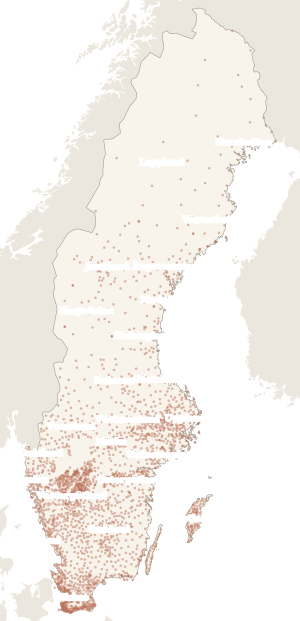
Götaland (south)
- Skåne (Skane, Scania) – 388 parishes
- Blekinge – 37 parishes
- Halland – 86 parishes
- Småland (Smaland) – 281 parishes
- Öland (Oland) – 33 parishes
- Gotland – 94 parishes
- Östergötland (Ostergotland, East Gothland) – 157 parishes
- Västergötland (Vastergotland, West Gothland) – 479 parishes
- Bohuslän (Bohuslan) – 77 parishes
- Dalsland – 44 parishes
Svealand (central)
- Värmland (Varmland, Wermland) – 91 parishes
- Närke (Narke, Nerike) – 44 parishes
- Södermanland (Sodermanland, Sudermania) – 121 parishes
- Uppland (Upland) – 188 parishes
- Västmanland (Vastmanland, Westmanland) – 65 parishes
- Dalarna (Dalecarlia) – 50 parishes
Norrland (north)
- Gästrikland (Gastrikland, Gestrikland) – 12 parishes
- Hälsingland (Halsingland, Helsingland) – 38 parishes
- Härjedalen (Harjedalen, Herjedalen) – 10 parishes
- Jämtland (Jamtland, Jemtland) – 51 parishes
- Medelpad – 18 parishes
- Ångermanland (Angermanland) – 49 parishes
- Västerbotten (Vasterbotten) – 18 parishes
- Norrbotten – 19 parishes
- Lappland (Lapland) – 16 parishes
Province, county and parish – what is the difference?
- Province (landskap). The 25 traditional regions. They have no administrative role today, but they are the identity many emigrants kept.
- County (län). The administrative region, given in many Swedish records and in American documents, for example “Kronobergs län”. Several counties were merged or renamed in 1997–1998.
- Parish (socken). The rural parish. Swedish church records are kept by parish, so this is the name you need.
- Congregation (församling). The church parish. Usually the same area as the socken; a town can have several.
Finding your ancestor’s home parish
Swedish records are kept by parish, so the parish (socken) is the key to everything. American documents often name it:
- Naturalization papers. The Declaration of Intention (after 1906) usually gives the place and date of birth.
- Death certificates and obituaries. They often name the parish, or at least the province.
- Swedish-American church records. Augustana Lutheran and other Swedish congregations often wrote down the home parish.
- The 1900 and 1910 U.S. censuses. They give the year of immigration, which narrows the search in Swedish moving-out records.
- Passenger lists after 1906. They give the last place of residence in Sweden.
- Gravestones, letters and photographs. A photographer’s stamp on an old portrait often names a Swedish town.
Already have a family tree? Upload your GEDCOM file and the map shows every Swedish parish that is already in it – free up to five generations.
Where the church records are
Swedish church books – household examination rolls (husförhörslängder), birth, marriage and death records, and moving records – are photographed and online:
- The National Archives of Sweden (Riksarkivet) – free images of the church books, searchable by parish name.
- ArkivDigital – a subscription service with color photographs of the same books.
- FamilySearch – free indexes of many Swedish births, baptisms and marriages.
Parishes, coordinates and counties: Wikidata (CC0).